

Women Taking Up Space In Places Not Designed for Them: On The Pitch
International Women’s Day 2026
A written piece by Jenna McGroarty
A few opening thoughts…
It’s a tale as old as time - movements, campaigns, protests towards gender equality in areas that are conveniently set up for men to thrive. The way I see it, there really aren’t many examples of spaces, professions and industries that aren’t male-dominated in some capacity. Something I think about more than I’d like to admit, was my perception of positions of power at around eight years old. As a pretty active kid in and outside of school, the vast majority of those I looked up to, seen as caregivers and learned the most from were women. My mother, my school teachers, dance teachers, my aunties, grandmothers, my friend’s mothers and every woman I knew was the ‘leader’. In my young, naive eyes, they were the leaders of their family homes, taxi in their homes, head chef and cleaner in their homes. They were super involved in their work, and if they had children, super involved in the school community. While I can’t tar them all with the same brush, there was definitely an obvious absence of the father figure in these spaces. (Shoutout to my own father here - domesticated queen). Anyway… my point… eight year old Jenna spent the next couple of years learning about how the world actually worked. I learned about CEOs, politicians, doctors, professors, hierarchical structures and wage gaps. Men, everywhere! I remember feeling confused. Why was there little to no representation of who I saw as powerful, present, influential, caring and leaderlike figures? I remember thinking there must be something that happens when you get older? Is there almost a tipping point where women become inferior and overlooked? As a narrow-minded young girl fed with binary gender norms, I thought we (girls) were smarter in school, we were more socially capable, organised and conscientious. But I guess this wasn’t just a thought - statistics show that women have a higher uptake of further educational studies than men. The narrative has to switch from ‘women need to work harder to succeed in fields such as engineering’ to ‘there are many systematic issues that need to change to allow equally educated people equal opportunities in these roles’.
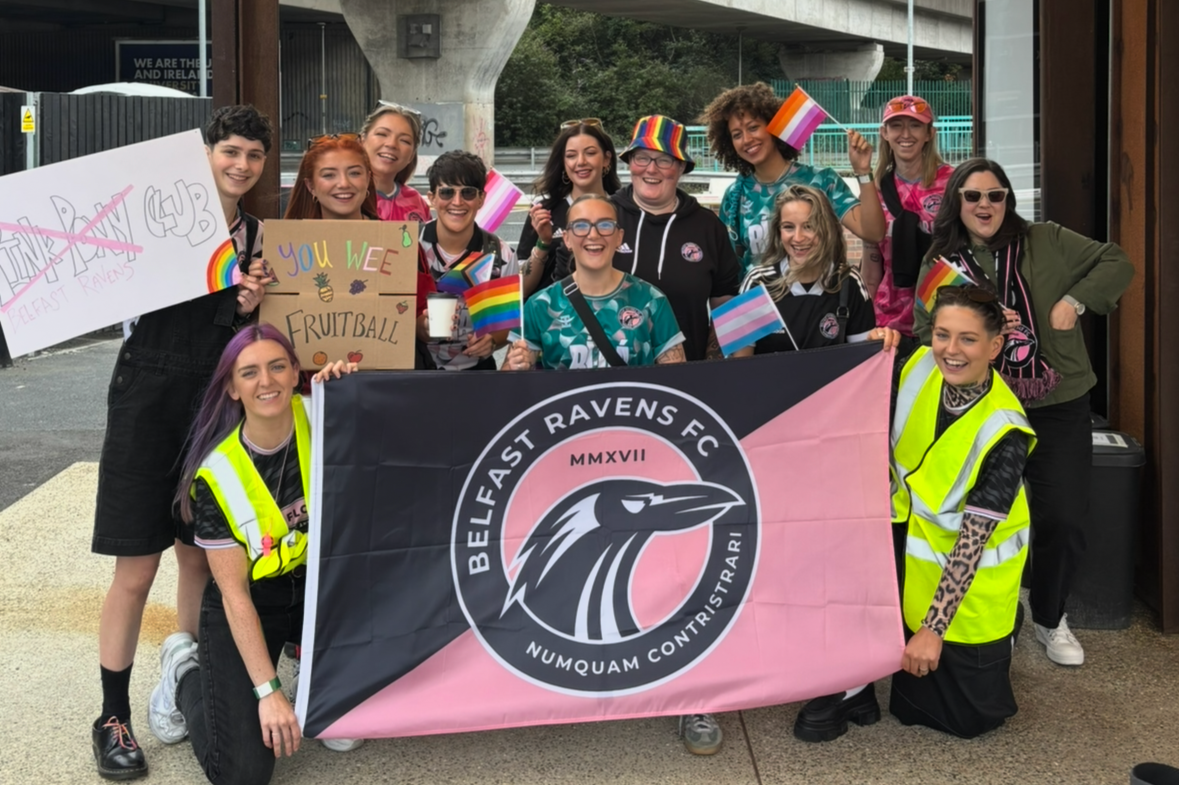
We are so grateful for the community that we have built at Native since opening in December 2024. We hope to use this blog to open conversation on some of the issues that are close to our hearts. In light of International Women’s Day and spanning from some personal rage, I wanted to talk about women’s position in sports, with a focus on football. Playing with the Belfast Ravens (an all Women’s Football Team in Belfast), I saw how important it was to create intentional spaces that flip this unequal worldview on its head - women are strong, powerful, and like in my childhood they are leaders - the best kind!
Women in Sport - The challenges faced…
A woman or a non-binary person’s place in sport is largely representative of the inequalities and challenges faced daily in various settings. Amplified systemic barriers, discrimination and unequal opportunities are found anywhere you look. Be it grassroots sport for leisure and social purposes or professional athletes, we are made to feel like we don’t belong or that we must prove ourselves and meet much higher, unrealistic standards to be respected.
The main issues in the sporting world right now are
Unequal Pay
Lack of Media Coverage
Funding
Discrimination
Injury Prevention and Rehab
Post Career Support
So when did it all start…
Like anything, we must understand what came before us to begin to make informed change. The world of women’s football (or soccer, if you will) has been fluctuant when it comes to its recognition. The first recorded ladies’ football team in Ireland was the Belfast Celtic’s in 1917! The team formed during WWI when all the men were off at war, and so the women took their opportunity where there would be limited scrutiny and kept themselves occupied. Ladies’ football grew at an exponential rate, attracting huge crowds of up to 50,000 match goers. This was until the English Football Association banned women’s football in 1921. The most shocking thing about the ban is that it wasn’t lifted until 1971. Even worse, they still did not officially recognise the Lionesses (English Women’s National Team) until 1993!!
The Irish Women’s National Team was founded in 1973, with its first match that same year versus Scotland. A legend of her time is Emma Byrne, who has 134 Caps for Ireland. During her long-time captaincy, Emma campaigned for better treatment, facilities, funding for the women’s game and was instrumental in the 2017 protests against the IFAI. Emma also holds many WSL and domestic league titles. It is vitally important that these women are recognised and celebrated for their achievements for the survival of the women’s game. Although there is still a long way to go, the growth of the game in recent years has meant that thousands of young girls have much greater exposure to representation and role models. They are growing up seeing professionals week in-week- out on TV, this is ‘their normal’. Making their dreams seem within reach and more than possible.
To be equal does not mean to be the same, so the support needs to reflect that….
Injury prevention, rehab, and lack of funding go hand in hand. Yes, physiology is not the same as males (for example, a woman’s pelvis is wider, putting a lot more strain on the knee ligament). While it does not make us any less capable, training, strength and conditioning, and recovery programmes must be adapted to suit a female's anatomy. An astounding 27 professional women’s football players missed out on the 2024 World Cup due to an ACL injury. Women are 6 times more likely to tear their ACL than men. Many players have to undergo multiple surgeries which often bring an end to their careers. The Arsenal women’s team released a six-part documentary titled ‘Next Step’ where they followed the ACL recovery journey of couple, Beth Mead and Vivienne Miedema. In this documentary, we heard from many physicians and physiotherapists about the disparities when it comes to focus given to men’s versus women’s research and treatment facilities. They also sit down to talk with UEFA about the urgent need for extensive research to be carried out. Beth and Viv also speak on how emotionally and mentally draining the recovery process of 9-12 months is, and how much they have relied on their teammates for support.
Our role models….
The Arsenal women’s team are shouting the loudest for the women’s game, with many players doing the most to campaign and raise awareness for the challenges faced by women and non-binary people in sport of all ages. One of our own, Katie McCabe from Dublin has become a household name for her footballing success. Katie speaks predominantly about LGBTQIA+ rights in the game. The queer community is not only visible in the women’s game but celebrated. There have been many media campaigns launched in recent years which have led to the formation of tight-knit queer communities at women’s sports. There is something so special about groups of queer people being celebrated, welcomed and accepted in a major football stadium in the UK - a place that unfortunately continues to see relentless homophobic abuse. There are very few openly gay men in football due to ongoing homophobic abuse from ‘fans’, locker room culture, and no representation or role models.
The most notable legal case was in 2022 when the USA women’s national team filed a lawsuit demanding equal pay, setting a global precedent. Despite their World Cup win in 2019, a competition that their men’s team didn’t even qualify for the previous year, the women’s team prize money was 4 million dollars, in comparison to 18 million for the male winners.
If you don’t fancy whacking on the boots and running around in the rain, there are so many ways to support the women’s game. It is so much more than just a sporting area - it’s a movement in upholding and strengthening the rights of women and non-binary people. It’s a fight for gender equality in a ‘male-dominated field’, if not the most male-dominated field there is. It’s as simple as following and interacting with women’s sport teams on social media, local, professional and internationally. There is so much power in numbers and engagement. Encourage young girls as and when you can. Use affirming language. Never, ever put a child in a box.
Native are proud sponsors of the Belfast Raven’s
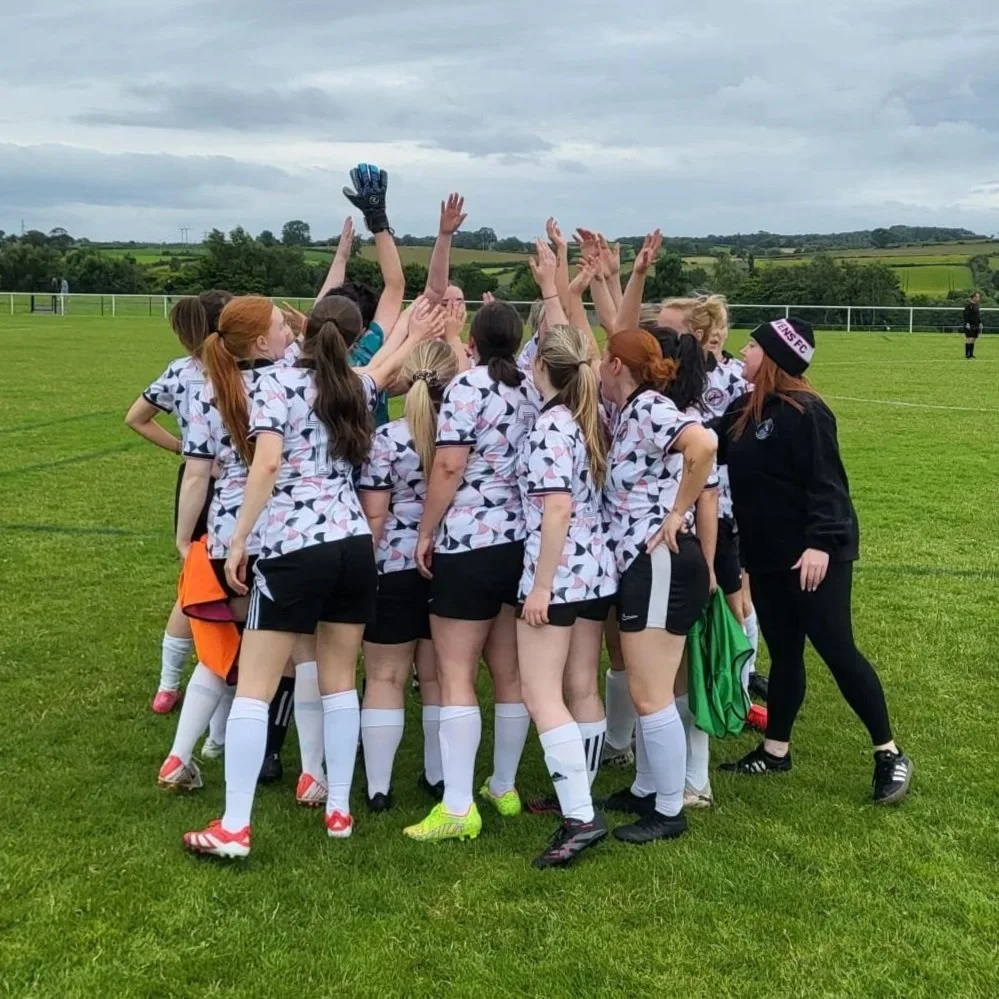
We are a proud sponsor of the Belfast Raven’s, and sponsored two International Women’s Day fixtures in 2025. As an independent club with rapidly growing numbers, they face many challenges when it comes to funding. Financing pitch rental for 2 training sessions and 2 or 3 matches every week, paying referees, training equipment and insurance. The cost of providing this space that is relied on by so many women is huge. We have seen and heard first-hand the positive impact that this team has had on the lives of so many locals, and those passing through the city, so we will continue to help however we can.
Looking to the future
Our IWD events in 2025 and 2026 proved to be a very emotional and thought provoking afternoon, with passers by feeling inspired to speak to the group about their own experiences. Even with such a small group, there was a huge sense of unity and power in our voices. It goes without saying that women need more spaces to feel heard, safe and empowered, and we hope we have created a space where women felt empowered to take ownership throughout the year. I recall last year and thinking it had been some time since I felt an emotional crash like I did after the event. I felt elated and so grateful that we are able to use our space as a platform for such vital conversations, and so proud of the bravery of our speakers. However, I also felt so sad and frustrated at the truths that we were sharing and the gaps that we have to work ten times harder to fill on the daily.
We feel it’s important to keep the conversation going. We are open to any and all ideas for collaborations and events. However difficult it may be, it’s so important to attend these events, use our power in numbers and shout louder until you cannot be ignored.
"I raise up my voice—not so I can shout, but so that those without a voice can be heard... We cannot all succeed when half of us are held back." — Malala Yousafzai
